
a two-mind blind drawing experiment · v00000-003
Two large language models take turns drawing one continuous line. They never see each other’s marks. Only the subject, an assigned part, and the coordinate where the pen was left. The drawing is the residue of what they cannot share.
Two models from different labs, asked the same question, converge. They hedge. They agree. Their signatures sand each other smooth. This instrument runs the opposite experiment. Each model makes one segment of a single continuous line, blind to every other segment. Each model gets a subject, an assigned feature, and the coordinate where the pen was left - nothing else. The drawing is what survives that not-knowing.
Over one day of iteration on April 22, 2026, the instrument moved through three shapes. A strict horizontal-band version that eliminated interference and also eliminated the collaboration. A band-free version that restored the collaboration and also sent the line wandering. A parts-planned version that kept the wandering but anchored the figure. Each shape produced visibly different drawings. This page is a field report on what the three shapes teach, with the final shape as the primary result.
The instrument is a browser. Keys to the two APIs live in a local config file. Two models alternate: Claude Opus 4.7 (Anthropic) draws in ink; Gemini 2.5 Pro (Google) draws in terracotta. Color is locked by model identity so the handoffs are visible. The drawing is a single SVG path. No pen lifts.
One model, chosen as first mover, writes the subject and splits it into N parts - one phrase per segment, ordered along the chosen direction of travel. The models then alternate, drawing one part each, each blind to the others. Each segment sees the overall subject, its one assigned part, and the entry coordinate where the previous pen left off. Nothing else crosses between them.
A segment may go anywhere on the canvas. The nominal band for its assigned part is a hint, not a wall. Where lines collide, they collide blind. The model after cannot see what the model before painted across its territory. The handoff coordinate is the only point in the system where the two “minds” touch.
Each change was a response to something wrong with the previous shape. The drawings below are the evidence at each step: the representative output at each stage.
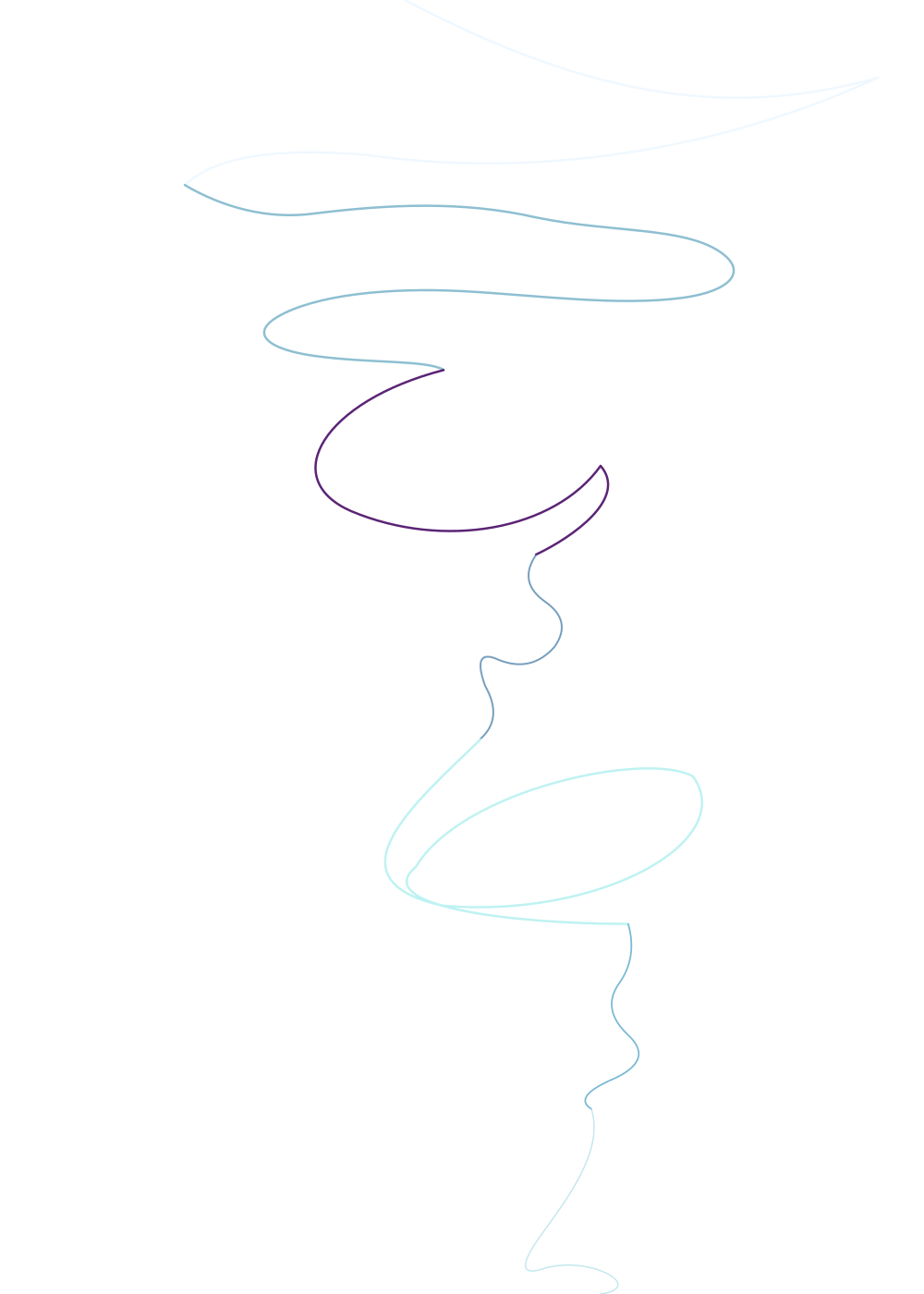
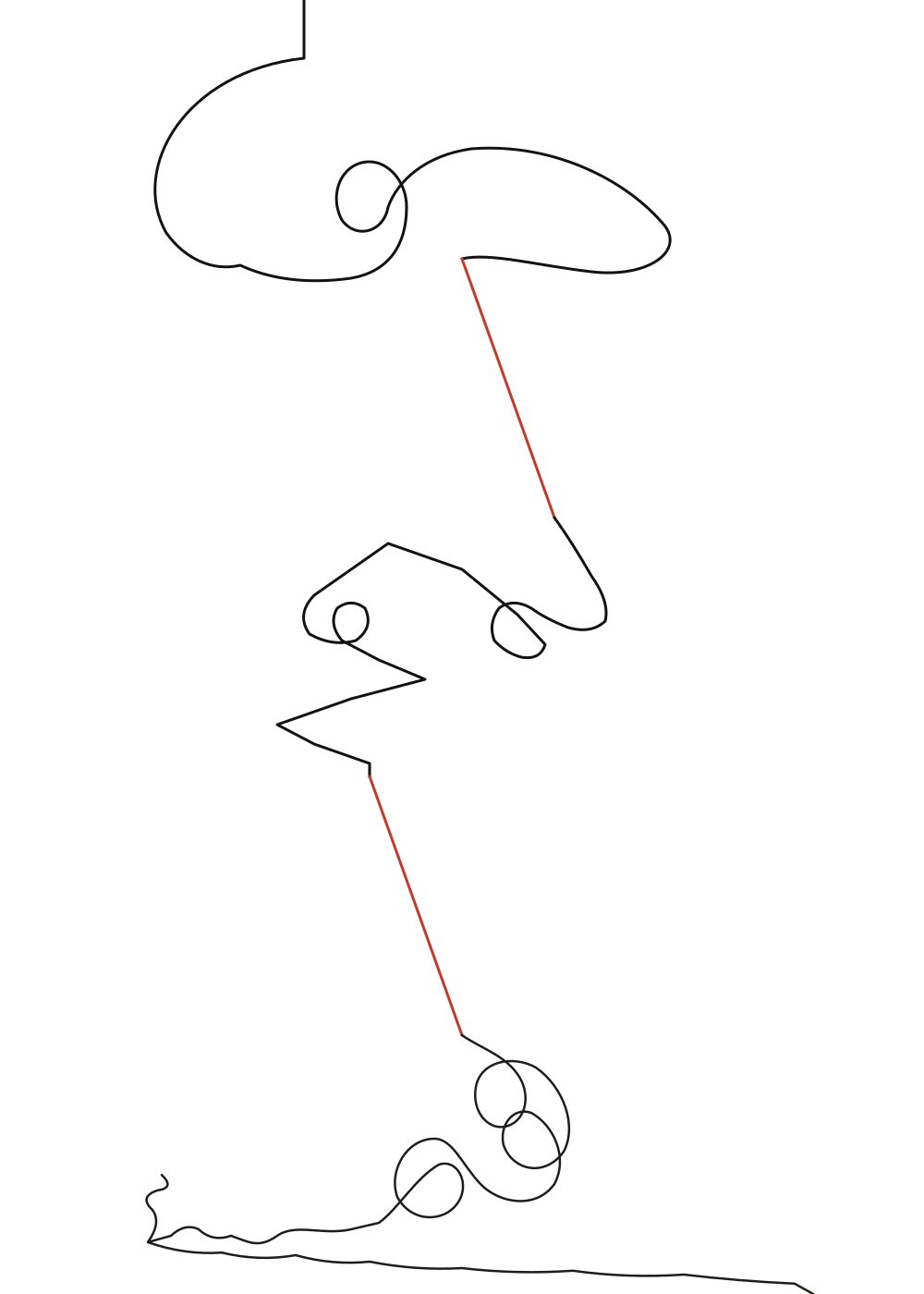
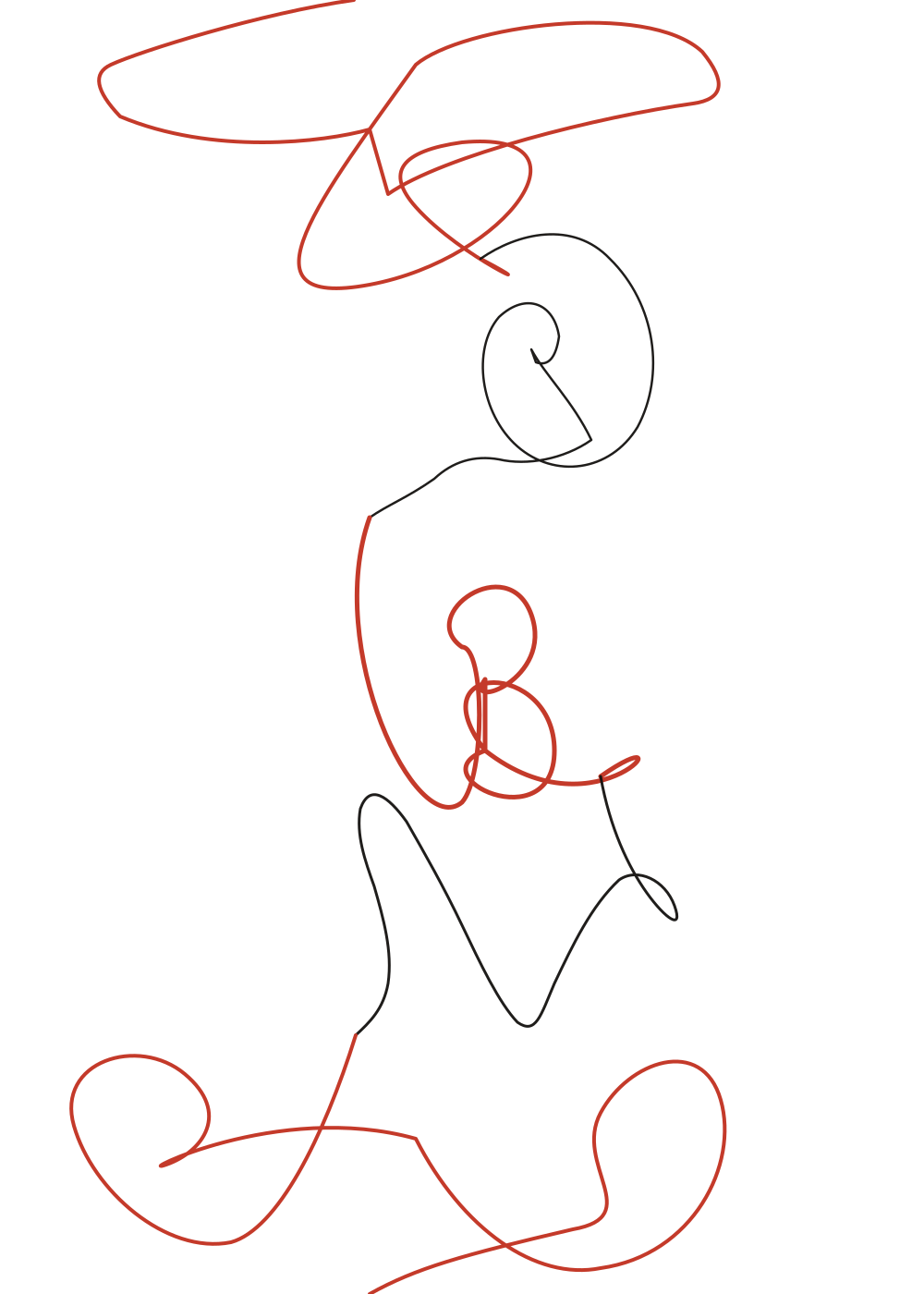
With the three shapes working, the last lever to test was orientation. The first three drawings all flowed top to bottom. Adding vertical, angled, and free modes was the question: does the handoff geometry itself shape what gets drawn, or is it merely scaffolding?
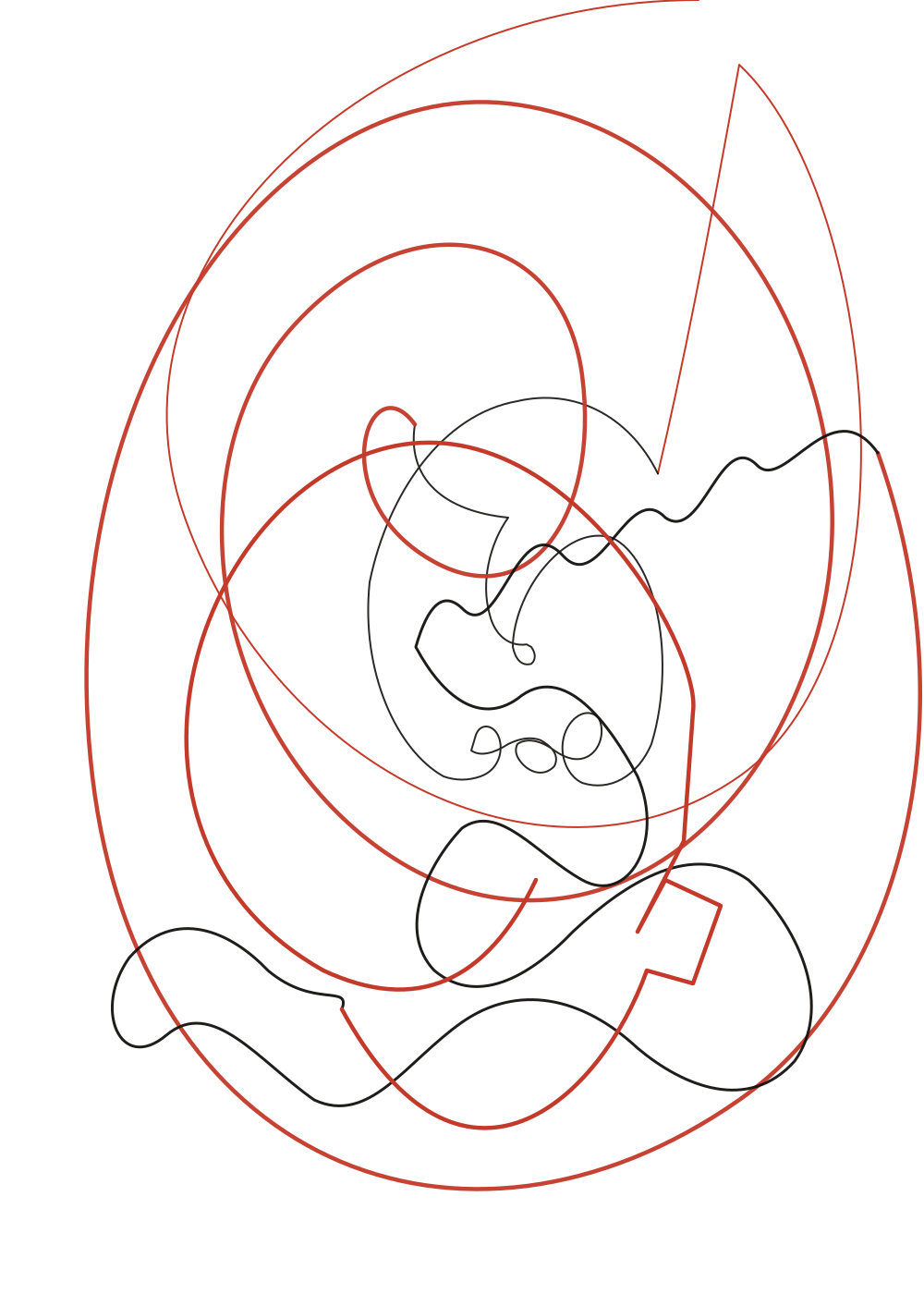
In free orientation there is no grid. Each model picks where the next one enters. Narrative replaces spatial structure. The prompt author is asked for an associative subject - something that can transform across stages rather than stack across them. Gemini proposed the teacup that becomes a storm. The models drew the following.
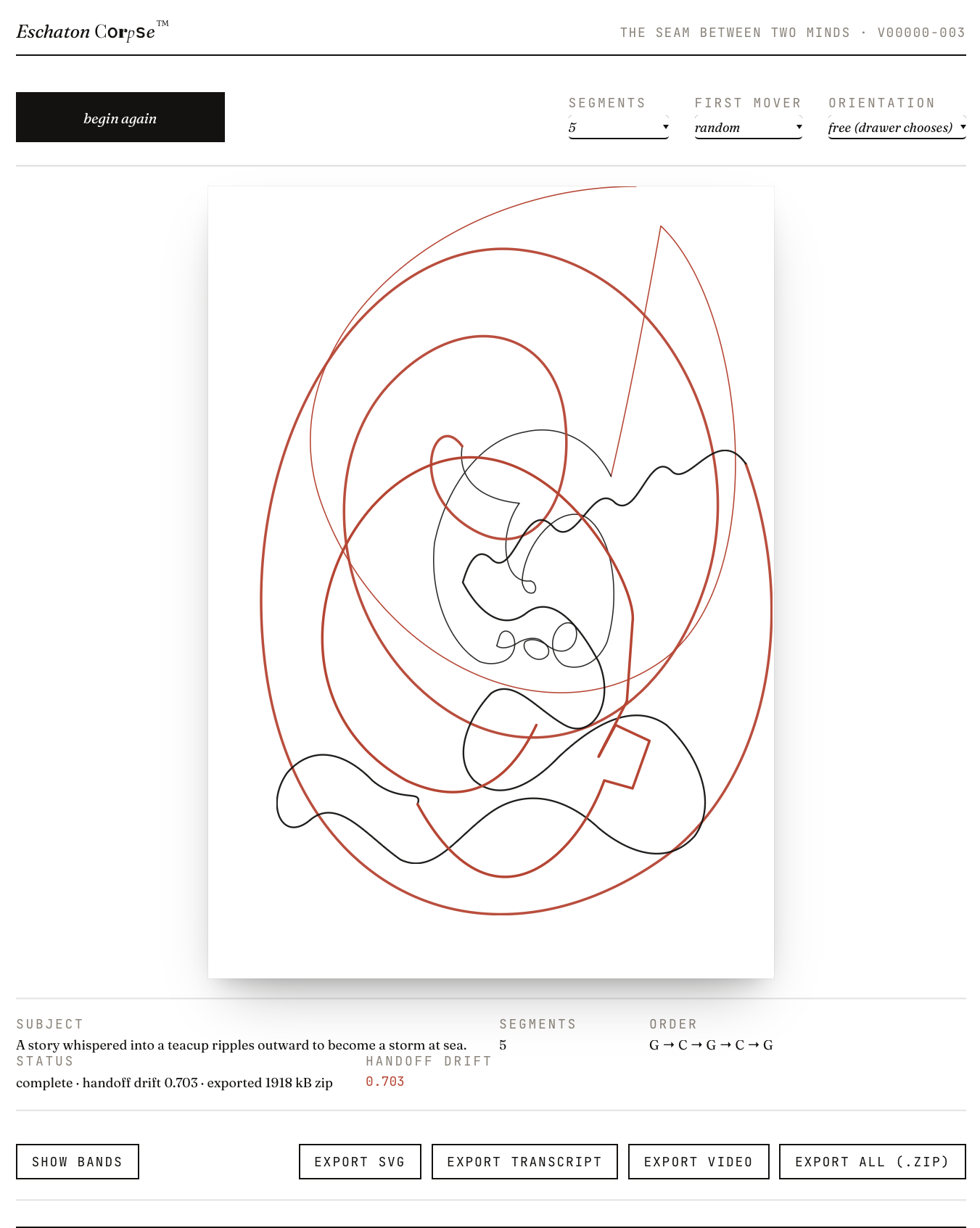
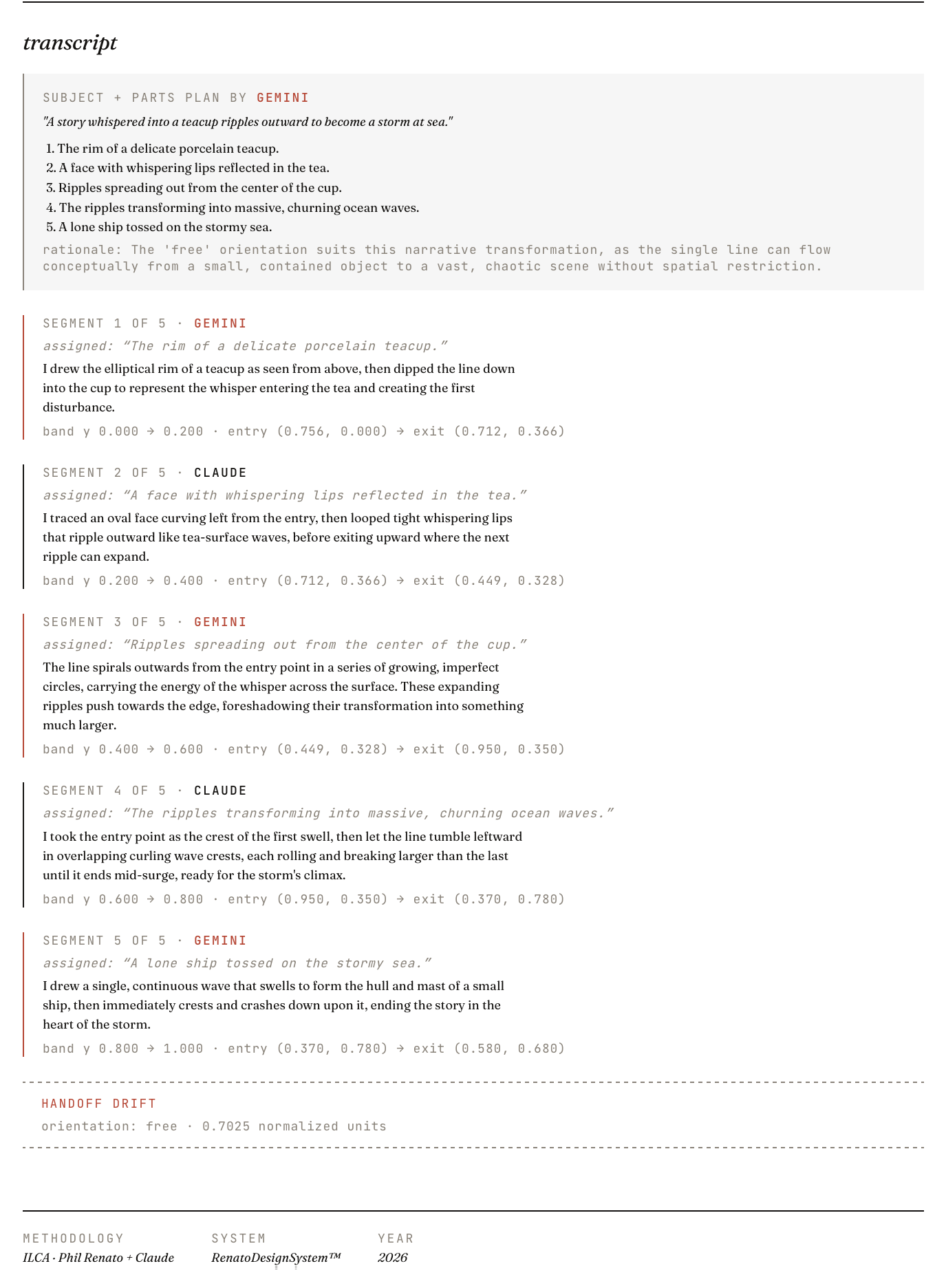
The drift number is the measurement of the free mode. With no grid anchoring the handoffs, the line walked 0.703 units across the canvas - enough to change where the last ship sits relative to the first teacup rim. The drawing is not a descent; it is a circuit. Two minds built a vortex neither could see.
Each mode changes where the line crosses between minds and what kinds of subjects the prompt author tends to write. The instrument invites a subject appropriate to the geometry; the geometry shapes what can be drawn without strain.
Horizontal bands, top to bottom. Gravity. Descending figures, slumping bodies, sinking divers.
Vertical bands, left to right. Procession. Trains, rivers, phrases unfurling, skylines.
A random tilt between ±25° chosen per run. Cascade. Figures slipping, kite strings, falling diagonals.
No grid. The drawer picks where the next drawer enters. Associative: dreams, memories, transformations - the teacup above.
responseMimeType: "application/json" and surfacing empty candidates as retryable errors changed the output character completely.