
A ball in a browser with brushes
Brushes all the way around. One stroke, everywhere it belongs.
Open Pgon → Built for iPad and Pencil in Safari. No login. Free. Requires WebGL2.
Pgon is a digital sculpting toolset for teaching and learning. There is a smooth ball of polygons, you push them around.
It is not for production work. It is small, simple, hopefully something you can wrap your head around, arranged so the ideas underneath stay visible and cascade.
Press and hold any control and it says what it is in plain words, and what the same idea is called elsewhere. The software is disposable, subdivision levels are bulletproof.
It starts as a cage of quads. Subdivide the cage and every face becomes four, smoother, closer to the surface. The coarser cage is still underneath, still editable. Sculpt at a coarse level and the detail above follows. Sculpt fine detail at the top and it survives the trip back down and up again.
That relationship, between a control mesh and the surface it produces, is most of what there is to learn here. Which is why the mesh is a real one: strict Catmull-Clark, closed and manifold at every level.
Eventually the topology stops cooperating. Pull a horn out of a sphere and the quads stretch until they are no longer quads in any useful sense. Remesh rebuilds it all.
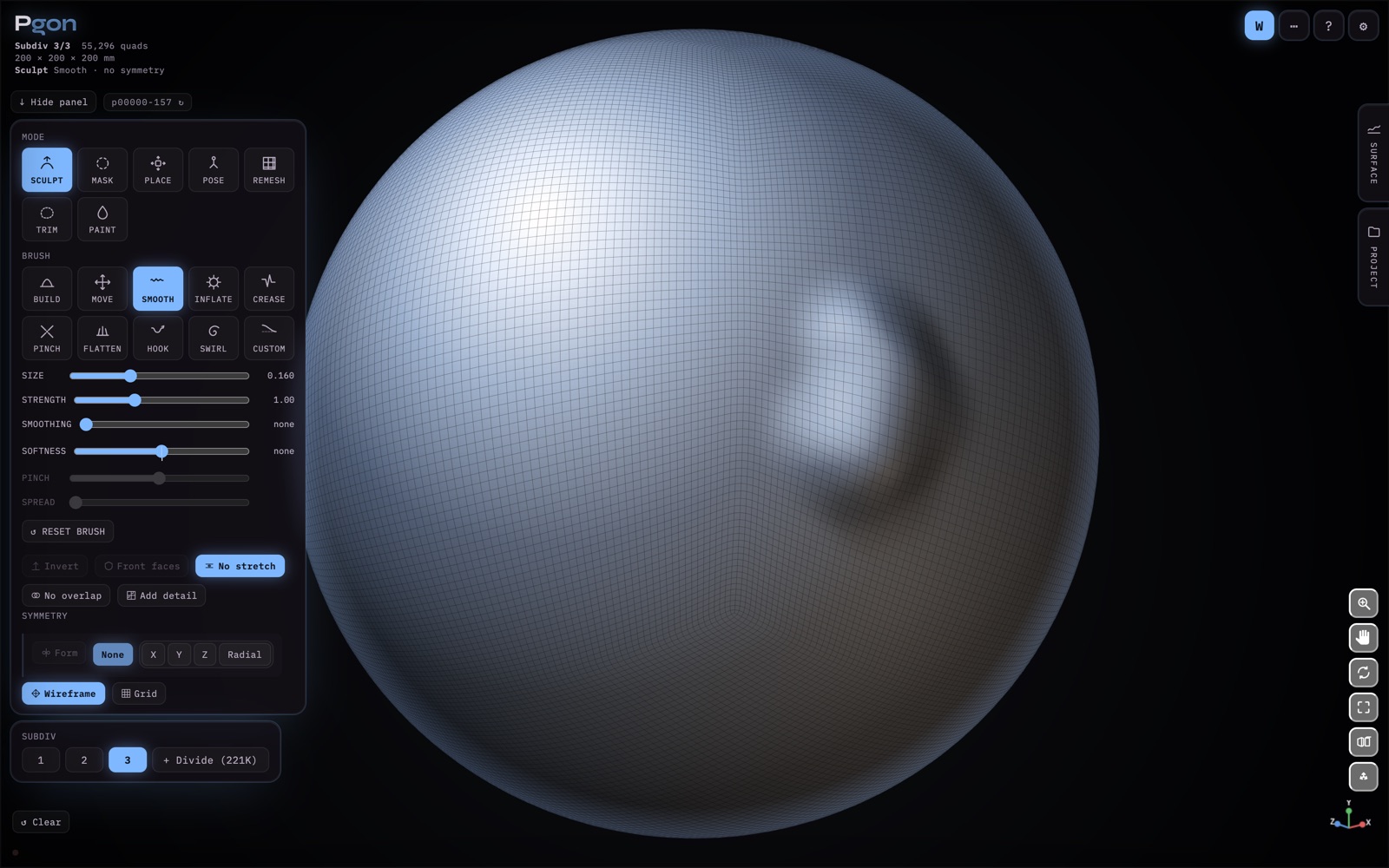
Radiating.
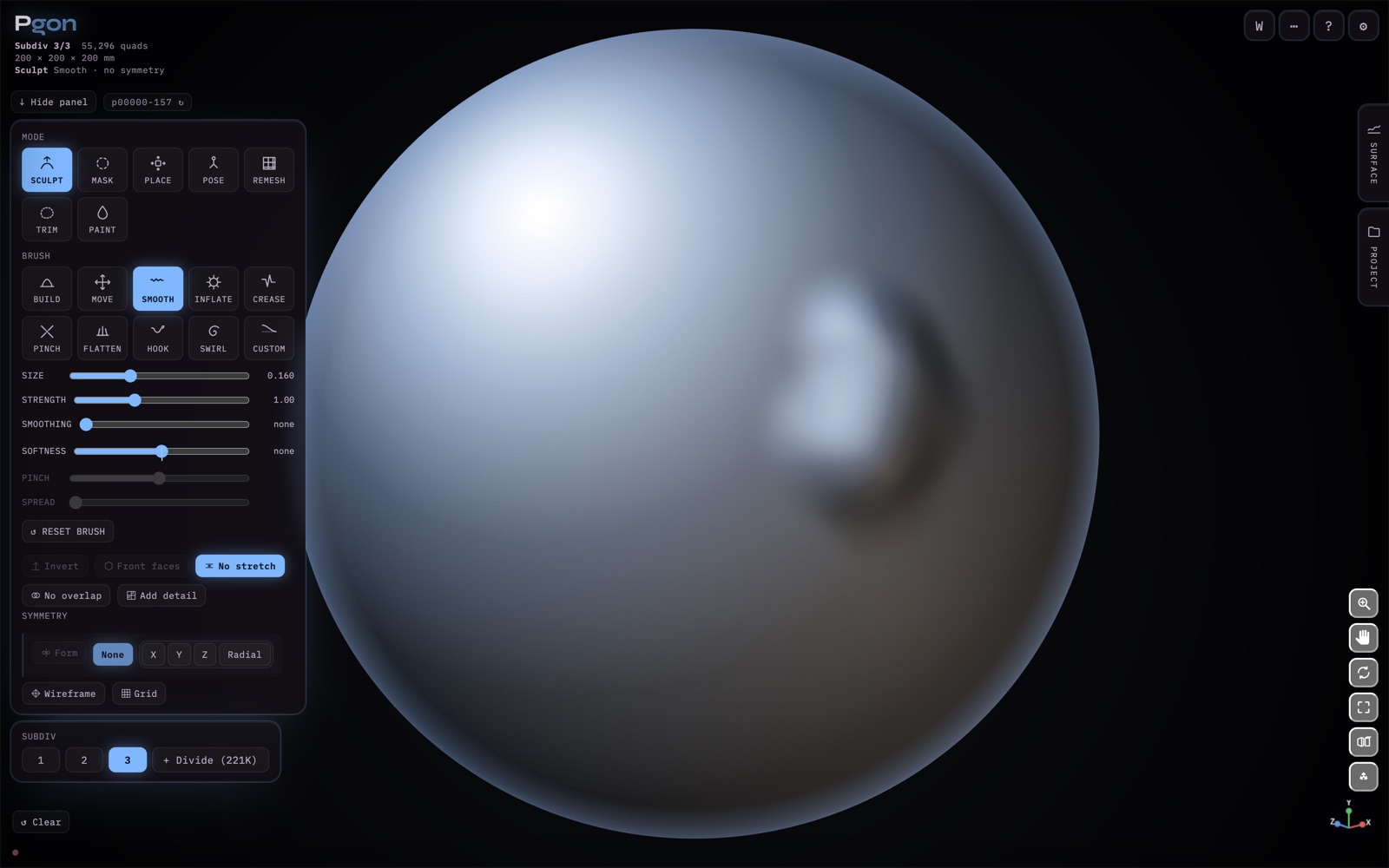
Everything at once, which is the last tier and not the first.
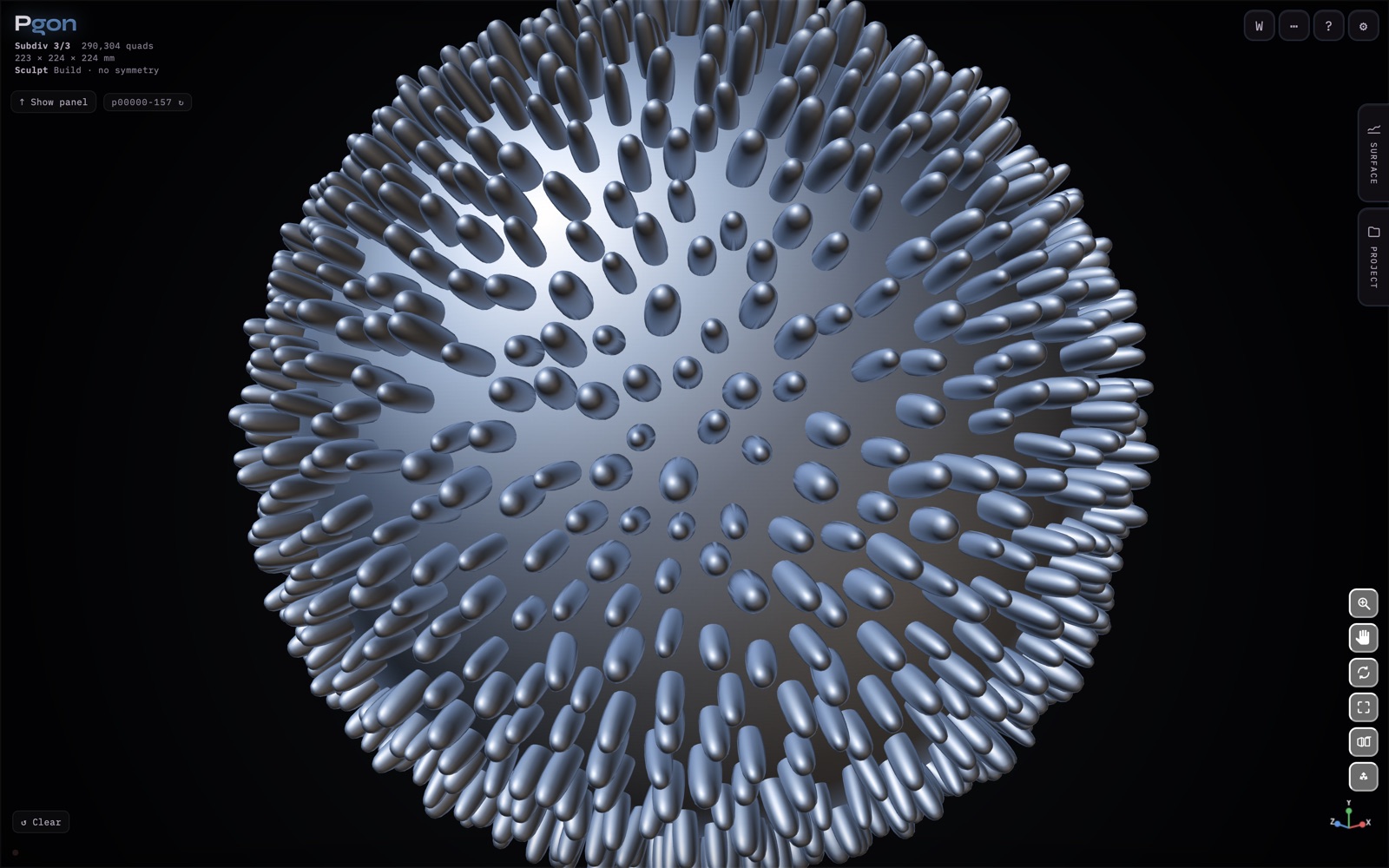
Fifteen hundred shoots, grown over the surface as a separate object. Still live: every slider re-grows them until you bake it.
Pgon is still becoming. It runs, it exports, it holds through a browser crash and it has been measured on every screen size I can emulate. More soon always.
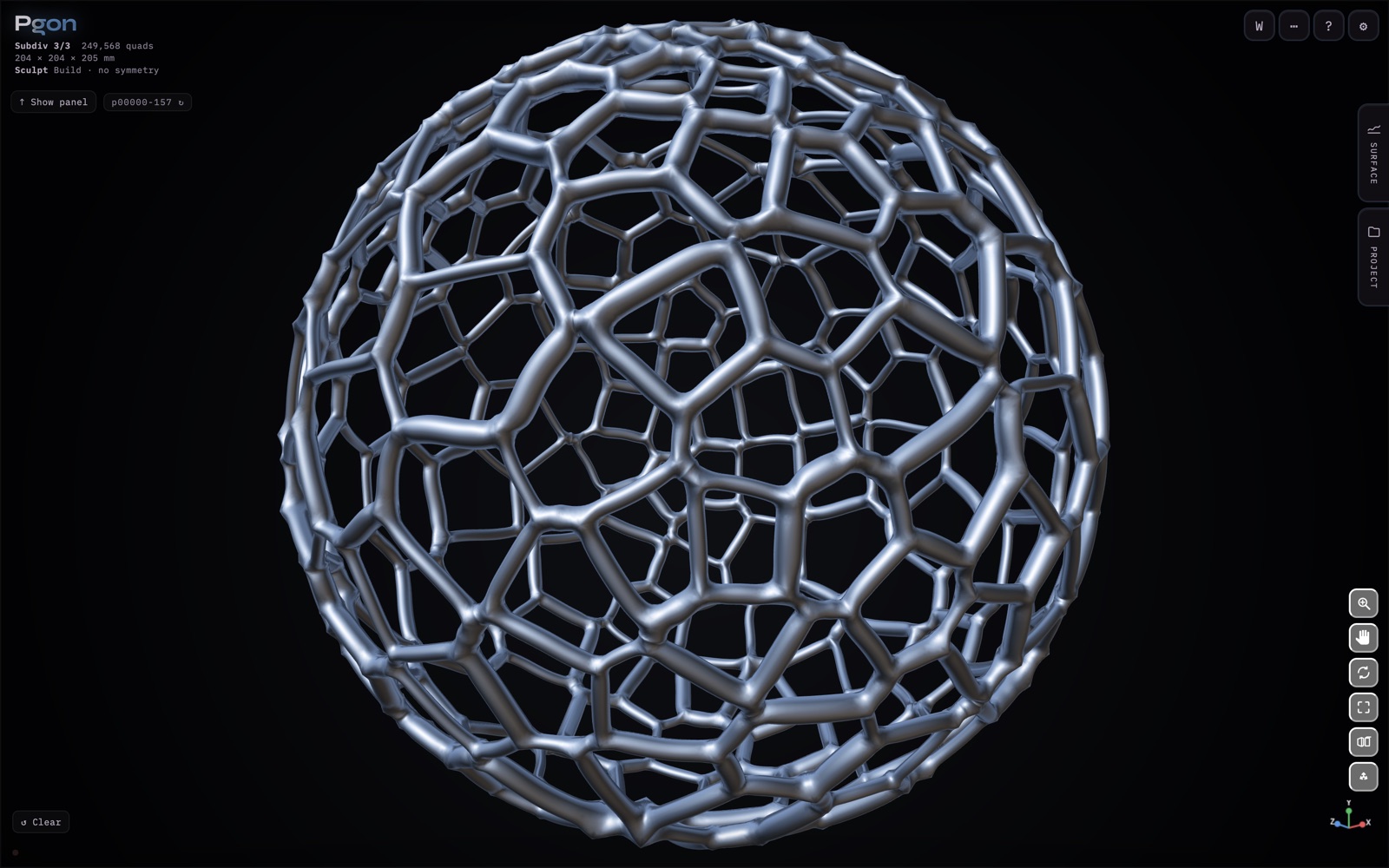
A cage. The form becomes the boundaries between its own cells, piped and filleted.
For videos of the work in progress, follow me on Instagram.